Directional Signage That Gets People Where They're Going
Parking, entrances, loading docks and departments, marked clearly enough that nobody has to stop and ask. We map the route, design the signs as one system, then build and install them.
Used by the world's leading companies, and your neighbors
How We Map A Site And Sign It
Good directional signage is a plan before it is a product. Here is how we get from a confusing site to a route people can follow without thinking about it.
We Walk The Route First
We drive and walk your site the way a first time visitor would, and mark every point where someone has to make a decision.
We Design The System
One family of colors, type sizes and arrows, sized so each sign is readable at the speed people are moving when they reach it.
We Fabricate And Install
Built in our Philadelphia shop and installed by our own crews, including permits and footings where the site requires them.
People Who Can't Find You Don't Come Back
Every wrong turn costs you something. A visitor circling the parking lot, a patient late for an appointment, a delivery driver at the wrong door. Directional signage answers the question before anyone has to ask it.
Fewer calls to the front desk asking where to park.
Clear routes through campuses, multi-tenant buildings and large sites.
One set of colors, type and arrows so every sign reads as a system.
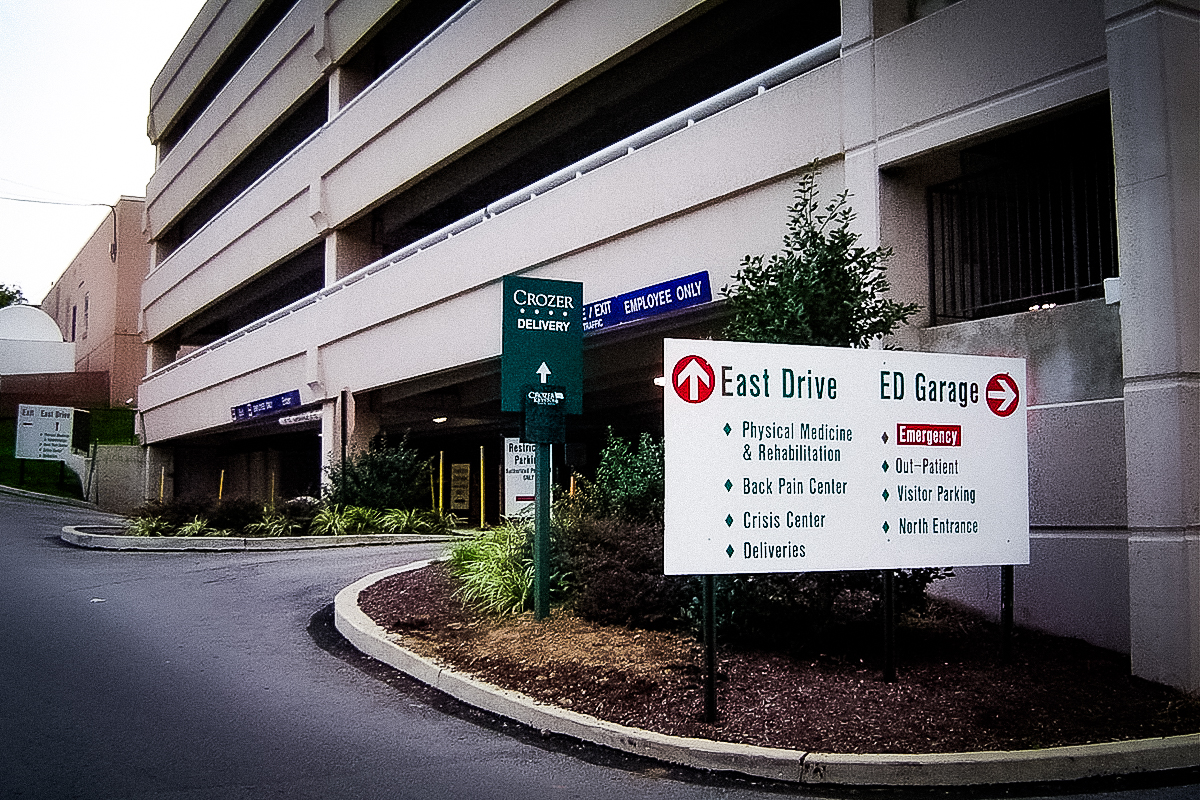
Built To Survive Weather, Traffic And Time
Directional signs live outdoors, take hits from carts and vehicles, and have to stay legible from a moving car. We build them from aluminum, high performance vinyl and reflective sheeting, then mount them so they stay put.
Post and panel, wall mount or fascia mount, matched to the site.
Reflective and non reflective faces so signs still read after dark.

Be A Standout Brand
Your audience constantly encounters new brands. Whether you aim to outshine competitors, support your team, or enhance your image, our signage and awning solutions can help. Request a quote or contact us with questions.
FAQs
Exterior wayfinding signage includes directional signs, parking signs, entrance and exit signs, building identification signs, pedestrian navigation signs, traffic flow signs, and campus or property maps.
Exterior wayfinding signage improves traffic flow, reduces confusion, enhances customer experience, increases safety, and helps visitors navigate large or complex commercial properties more efficiently.
Brand consistency starts with a complete sign inventory and a set of brand standards that specify exact colors (Pantone/PMS), fonts, logo usage rules, and approved sign types. A sign company experienced in rebranding will use these standards to design every sign in your package — exterior, interior, wayfinding, window graphics — so all elements match. Getting sign-off on proofs before fabrication begins is the best way to catch inconsistencies before they are built.
Yes. Exterior wayfinding systems often include property maps, tenant directories, parking maps, and informational panels to help visitors navigate the property more efficiently.
Yes. A well designed wayfinding system helps reduce congestion, improves navigation, directs traffic efficiently throughout the property, and creates a better overall experience for visitors, customers, and tenants.
Commercial directional signage uses arrows, destinations and concise instructions to guide people toward entrances, parking, departments, loading areas, elevators or other locations. It may be temporary or permanent and can operate as an individual sign or as part of a larger wayfinding system.
Common locations include property entrances, parking lots, building intersections, lobbies, corridors, elevators, service areas and event routes. Signs are most useful before or at a decision point. A sign placed after the turn cannot reliably prevent a missed route.
Hospitals, schools, office buildings, shopping centers, industrial facilities, hotels, parking facilities, venues and multi-tenant properties often need directional signs. The sign family should account for visitors, employees, deliveries, emergency access and accessible routes without mixing incompatible messages.
Use familiar destination names, consistent terminology and arrows that clearly correspond to the required movement. Messages should be short enough to read at the expected speed and distance. Similar destinations should not change names from one sign to the next.
Text size depends on viewing distance, movement speed, lighting, contrast, font and message length. Driver-oriented signs generally need larger characters than pedestrian signs. Available panel size and code requirements also affect the final layout, so one universal letter height is not appropriate.
Yes. Temporary signs can support events, construction, parking changes or short-term operations, while permanent signs serve stable routes and destinations. Portable signs must remain stable, visible and outside required paths. Temporary placement does not automatically exempt a sign from property or municipal rules.
Indoor signs may use acrylic, aluminum, plastics, printed graphics or framed panels, while exterior signs require materials, finishes and supports suited to weather exposure. Material choice also depends on changeability, accessibility, cleaning, vandal resistance and expected service life.
Yes. Colors, typography, icons, shapes and materials can reflect the property brand while preserving readability. Brand styling should not reduce contrast, make arrows ambiguous or create inconsistent destination names. Regulatory signs may have standardized requirements that limit customization.
Directional and informational signs that identify functional spaces may be subject to visual criteria, while tactile requirements apply to specific permanent-room and space designations. The correct specification depends on sign purpose and location. Accessible routes and required symbols also have separate requirements.
Requirements depend on jurisdiction, size, height, location, mounting, illumination and whether the sign is custom wayfinding or a regulated traffic sign. Property-owner approval may also be required. Each proposed sign should be checked rather than assuming all directional signs are exempt.
Cost depends on sign quantity, dimensions, materials, printing, structures, illumination, changeable components, site access and installation. A message schedule and location plan help define the true scope. Indoor inserts and exterior freestanding signs have very different cost drivers.
Yes, if changeability is considered during design. Replaceable panels, inserts, vinyl messages or modular systems can simplify updates. A revised destination may also require changes to earlier signs in the route so visitors receive consistent information from the first decision point.
A directional sign provides a specific instruction at one location. An exterior wayfinding system coordinates many signs, destinations and decision points across an entire property. A successful system considers the full journey rather than treating each arrow sign as an isolated product.
Placement is based on entrances, routes, destinations, decision points, sight lines, viewing distance, traffic speed, accessibility and site constraints. Martino Signs can document and plan the sign locations, while property and regulatory approvals remain part of the final process.
Yes, if each face serves a different approach direction and the messages do not conflict. Arrows and destinations should be verified from the viewer's perspective on both sides. The structure, artwork and sign schedule should clearly identify each face before fabrication.