Why Your Storefront Needs a Thermal Airlock, Not Just a Better Door

There's a problem hiding in plain sight at most Philadelphia storefronts, and it opens and closes about a hundred times a day.
Every time a customer walks in during a January Nor'easter, or pushes through the door on a 95-degree July afternoon, a wave of outside air floods your entrance. In a few seconds, the climate-controlled air you've been paying to maintain escapes into the street. Multiply that by a full day of foot traffic and you start to understand why energy bills spike in high-traffic businesses. The door isn't broken. It's just doing exactly what it was designed to do. The problem is that a standard door was never designed to handle the thermal demands of a busy commercial entrance.
That's the gap a custom winter vestibule fills, and despite the name, it fills it in every season.
It's Not a Porch. It's an Airlock.
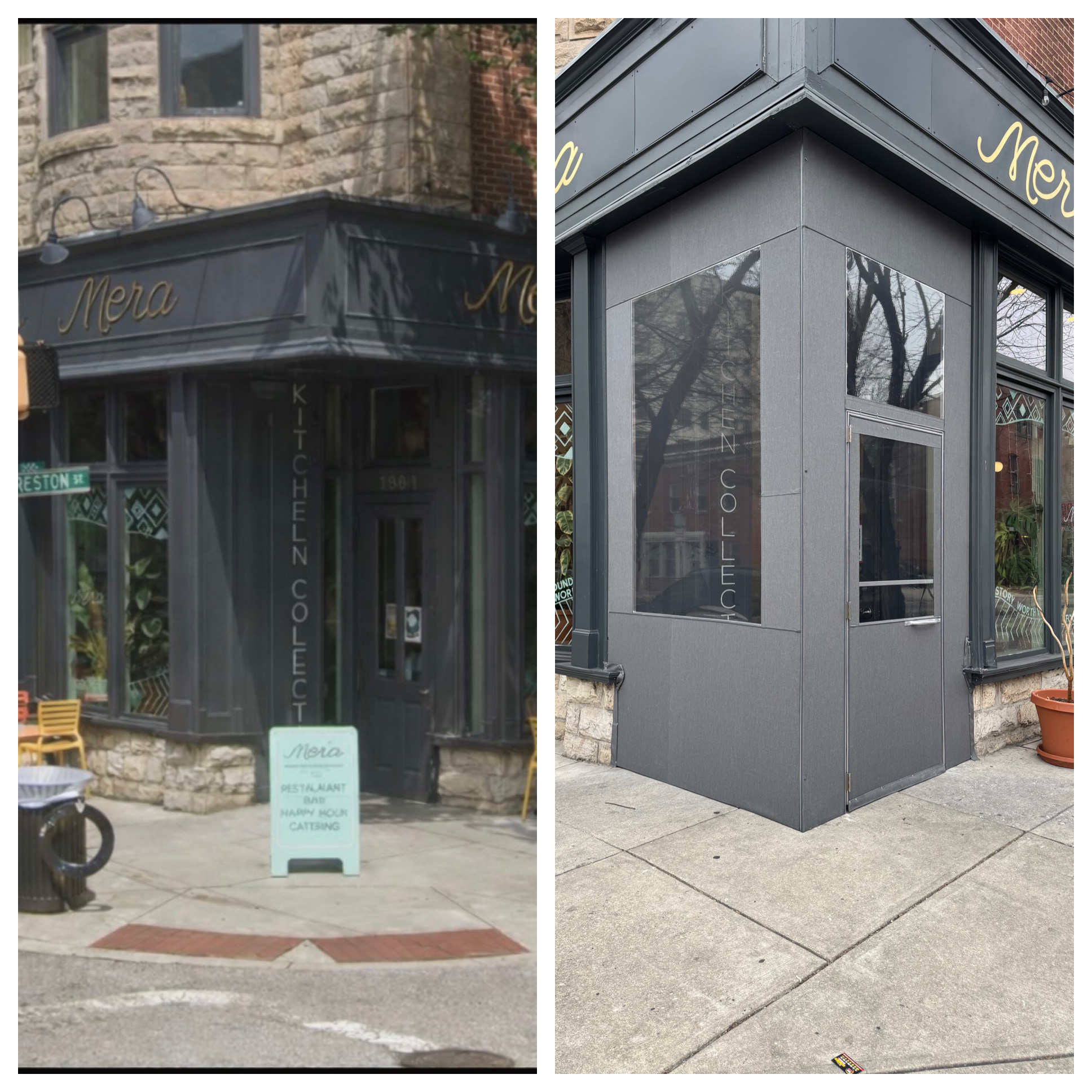
The more accurate term for what we build is a thermal airlock. Instead of one door separating your interior from the outside, there are two. The buffer zone between them, just a few feet, means outside air never reaches your interior directly. One door closes before the other opens. The temperature differential is contained.
In winter, that means Nor'easter wind and cold stay at the threshold. In summer, it means humid 95-degree air doesn't slam into your air conditioning every time a customer enters. Philadelphia summers are legitimately brutal: the combination of high humidity, radiant heat off asphalt and brick, and the urban heat island effect in dense corridors like Center City means your AC is already working hard before the first customer walks in. A vestibule takes the biggest variable off the table.
The same physics also work against driving rain, wind-blown debris, street noise, and moisture intrusion that warps floors and rusts fixtures over time. Businesses near the Delaware River waterfront or in exposed Center City corridors feel all of this more acutely than most. The seasonal framing in the name "winter vestibule" undersells what these structures actually do, which is protect your interior environment year-round.
The results show up on utility bills:
- Up to 60% reduction in air infiltration at the entrance
- Up to 15% savings on total heating and cooling costs
- Extended HVAC equipment life by eliminating the short-cycling caused by constant temperature swings at the door
The Hidden Cost Most Business Owners Miss: Short-Cycling
Ask most business owners what's wearing out their HVAC system and they'll guess age or lack of maintenance. The real answer in high-traffic commercial spaces is often short-cycling, the rapid on-off pattern that happens when a thermostat can't maintain a stable temperature because the entrance keeps dumping outside air into the space.
Every hard start accelerates wear on compressors and motors. Repair frequency climbs. Equipment that should last fifteen years starts showing problems at eight. A thermal airlock vestibule stabilizes your interior temperature and lets your HVAC run in the long, efficient cycles it was designed for. It doesn't just reduce your monthly energy bill; it protects a capital asset.
The Part Nobody Talks About: Table One
Every high-traffic dining room has a dead zone, the tables closest to the entrance that nobody wants in January or July. The draft in winter, the heat blast in summer, the noise from the door constantly opening. Guests ask to move. In a busy restaurant where every cover counts, those are real dollars. A vestibule eliminates the problem at the source. Table One becomes just another table. The entrance becomes a calm, dry space where guests can wait for a host without crowding your floor. It's a small operational detail, but regulars notice it, and it shows up in reviews.
Philadelphia Has a Lot Riding on 2026
This is not a normal year for this city. The World Cup is coming. The MLB All-Star Game is coming to Citizens Bank Park in July. And on July 4th, Philadelphia will be at the center of America's 250th birthday celebration, a moment that will bring visitors from across the country and around the world in numbers we haven't seen in a generation.
That is an extraordinary amount of foot traffic concentrated in a short window, hitting the city right in the middle of summer. Restaurants along the Broad Street corridor, retail on Walnut and Chestnut, bars in Fishtown, hotels throughout Center City: every one of them is going to be tested. The storefronts that handle it best won't be the ones that scrambled to prepare in June. They'll be the ones that treated their entrance as infrastructure and got it sorted months in advance.
A custom vestibule enclosure takes lead time to design, fabricate, and install. If you're planning to be ready for the summer of 2026, the conversation needs to happen now. The businesses that move first won't be scrambling in August. They'll be focused on the customers walking through the door.


Explore RElated Content
You might enjoy this related content from Martino Signs